


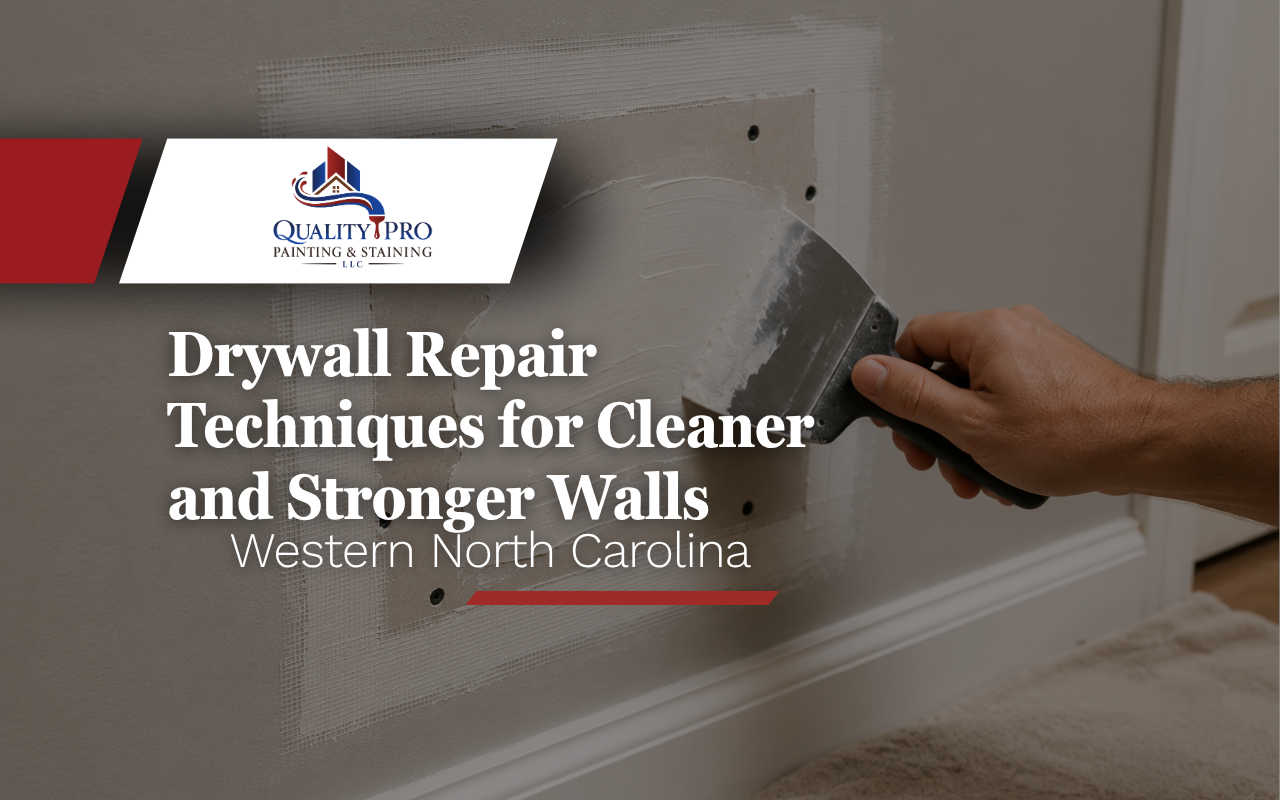
Drywall Repair Techniques for Cleaner and Stronger Walls
Learn drywall repair techniques for fixing holes, cracks, and dents while creating smooth, clean walls ready for a lasting finish.
At Quality Pro Painting & Staining LLC, with 16+ years of local experience across Marion, Asheville, and Hickory NC, we deliver top-tier craftsmanship and durable residential and commercial finishing solutions.
Drywall Repair Techniques Can Make Damaged Walls Look Clean and Strong
Drywall repair techniques can make damaged walls look clean, smooth, and ready for paint. At Quality Pro Painting & Staining LLC, we know that cracks, dents, and holes can change how a room feels.
Good results depend on careful prep, proper tools, and simple drywall patching methods. Choosing the right wall repair materials also helps the finish blend naturally. Careful choices can save time and reduce extra work later.
Common Wall Damage and What It Usually Means
Wall damage can appear in several forms. Nail holes, dents, cracks, and soft spots are common in many homes. Moisture can also cause bubbling paint or weak drywall. Finding the cause first can prevent repeat damage. It also helps you choose a repair that fits the wall condition.
Different damage needs different drywall repair techniques. A small hole may need filler, while a wider crack may need tape and drywall joint compound. Larger openings often need a new drywall piece and firm support behind the wall.
- Small holes from nails or screws
- Cracks near corners and wall seams
- Dents from furniture or daily use
- Soft areas caused by moisture
Useful Tools and Materials for Better Wall Repairs
The right tools make each repair easier and cleaner. Basic supplies include a putty knife, utility knife, sanding sponge, drywall screws, mesh tape, and joint compound.
At Quality Pro Painting & Staining LLC, we value good preparation before wall work begins. Organized tools also make each step safer and easier to control. Our painting and wall repair services show why careful surface work matters.
- Putty and taping knives
- Mesh or paper repair tape
- Lightweight joint compound
- Fine sanding sponge or paper
- Drop cloths and safety glasses
Preparing Damaged Drywall Before Starting Any Wall Repair
Preparation is one of the most important drywall repair techniques. Remove loose paint, weak drywall, and dust around the damaged area. Then wipe the surface with a clean, damp cloth.
Next, protect nearby floors and furniture with drop cloths. If the wall has moisture damage, solve that problem before applying any patch or compound. Dry surfaces give repair products a better chance to hold.
Simple Patching Steps for Holes and Wall Cracks
Small holes can often be filled with a thin coat of drywall joint compound. For cracks, place mesh tape over the damaged line before adding compound. Spread the material past the repair edges so the patch blends into the wall.
For larger holes, cut a clean square around the damage. Add wood support behind the opening, then attach a matching drywall piece with screws. These drywall patching methods create a stronger base.
- Clean and shape the damaged area.
- Add tape or support when needed.
- Apply thin coats of compound.
- Let every coat dry fully.
Sanding Methods That Create a Smooth Wall Surface
Good drywall sanding techniques help remove ridges without damaging the patch. Start gently and use fine-grit sandpaper or a sanding sponge. Avoid heavy pressure, which can expose tape or create low spots.
After sanding, wipe away dust and check the wall under bright light. If you see dips, apply another thin coat of compound. For examples of clean surfaces, visit our completed wall finishing projects.
Finishing Levels That Support Cleaner Final Paint Results
Drywall finishing levels describe how smooth a wall should be before paint or another finish is added. Painted walls need an even surface with covered seams and patch edges.
Primer should cover repaired areas before final paint coats. It also helps the repaired section accept paint more evenly. When using drywall repair techniques, careful finishing often makes the difference between an obvious patch and a natural-looking wall.
Request Your Free Estimate in WNC
Ready to transform your home with professional painting, log cabin wood staining, or drywall installation? Quality Pro Painting & Staining LLC provides detailed complimentary estimates within 1–2 business days.
Get A Free Estimate NowFrequently Asked Questions
How long should drywall compound dry before sanding?
Drying time depends on the product, room temperature, and coat thickness. Always let the surface dry fully before sanding or adding another layer.
Can small drywall holes be repaired without tape?
Yes. Very small nail or screw holes often need only filler or compound. Wider damage usually needs tape or added support.
What causes drywall cracks to return later?
Cracks may return because of wall movement, weak tape, moisture, or poor bonding. Careful preparation can reduce repeat problems.
Which sanding method works best for drywall patches?
Fine-grit paper or a sanding sponge works well for most repairs. Use light pressure and check the surface often to avoid sanding too deeply.
When should I call a professional for repairs?
Professional help is useful for large holes, repeated cracks, moisture damage, or repairs that need a very smooth finish.
- • 16+ Years Regional Experience
- • Fully Licensed Liability & Workers Comp
- • Free On-Site Estimates (1-2 Days)
- • Residential & Commercial Specialists